
Rath Yatra Puri
The Chariot Festival of Lord Jagannath.
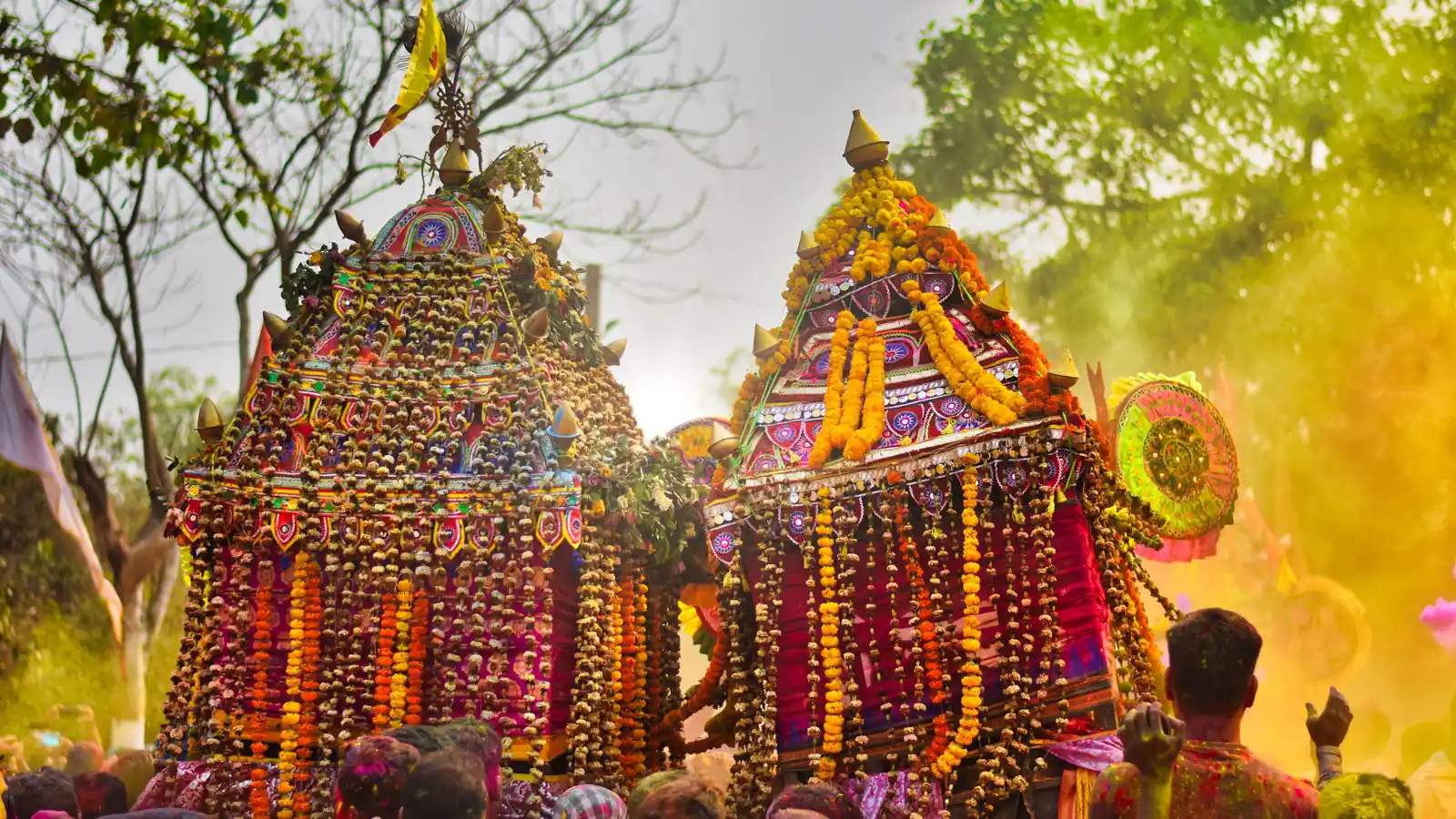
Every year, three towering wooden chariots carry Lord Jagannath, Balabhadra and Subhadra down the Grand Road of Puri, pulled by millions — the one time all may have darshan of the Lord.
Get a Free Quote
Tell us your dates — we reply within 2 hours on WhatsApp.
What It Is
When the Lord comes out to meet everyone.
The Rath Yatra, or Chariot Festival, is the grandest event in Puri’s calendar. Held annually in the Hindu month of Ashadha (June–July), it is the day Lord Jagannath, his brother Balabhadra and their sister Subhadra leave the sanctum, mount three colossal chariots, and travel through the streets so that every devotee may see them.
The three chariots are built brand-new every year from specific woods, then pulled by hand along the Bada Danda (Grand Road) to the Gundicha Temple. To grasp the ropes and help pull the chariot even a few feet is believed to be deeply auspicious. Because the dates follow the lunar calendar, they shift each year — ask us for this year’s dates.
The Three Chariots
Rebuilt new, every single year.
Nandighosa
Lord Jagannath
The tallest chariot, with sixteen wheels and yellow-red canopies. It carries Lord Jagannath at the rear of the procession.
Taladhwaja
Lord Balabhadra
The chariot of the elder brother Balabhadra, marked by its palm-tree emblem and blue-red drapes, with fourteen wheels.
Darpadalana
Devi Subhadra
The chariot of the sister Subhadra — also called Devadalana — the smallest of the three, with twelve wheels and black-red canopies.
The Journey
From the temple to Gundicha, and home again.
Pahandi Bije
The deities are brought out of the temple in a swaying, ceremonial procession and placed on their chariots amid roaring crowds.
Chhera Pahara
The Gajapati King of Puri sweeps each chariot platform with a golden broom — a king humbling himself as a servant of the Lord.
The Grand Pull
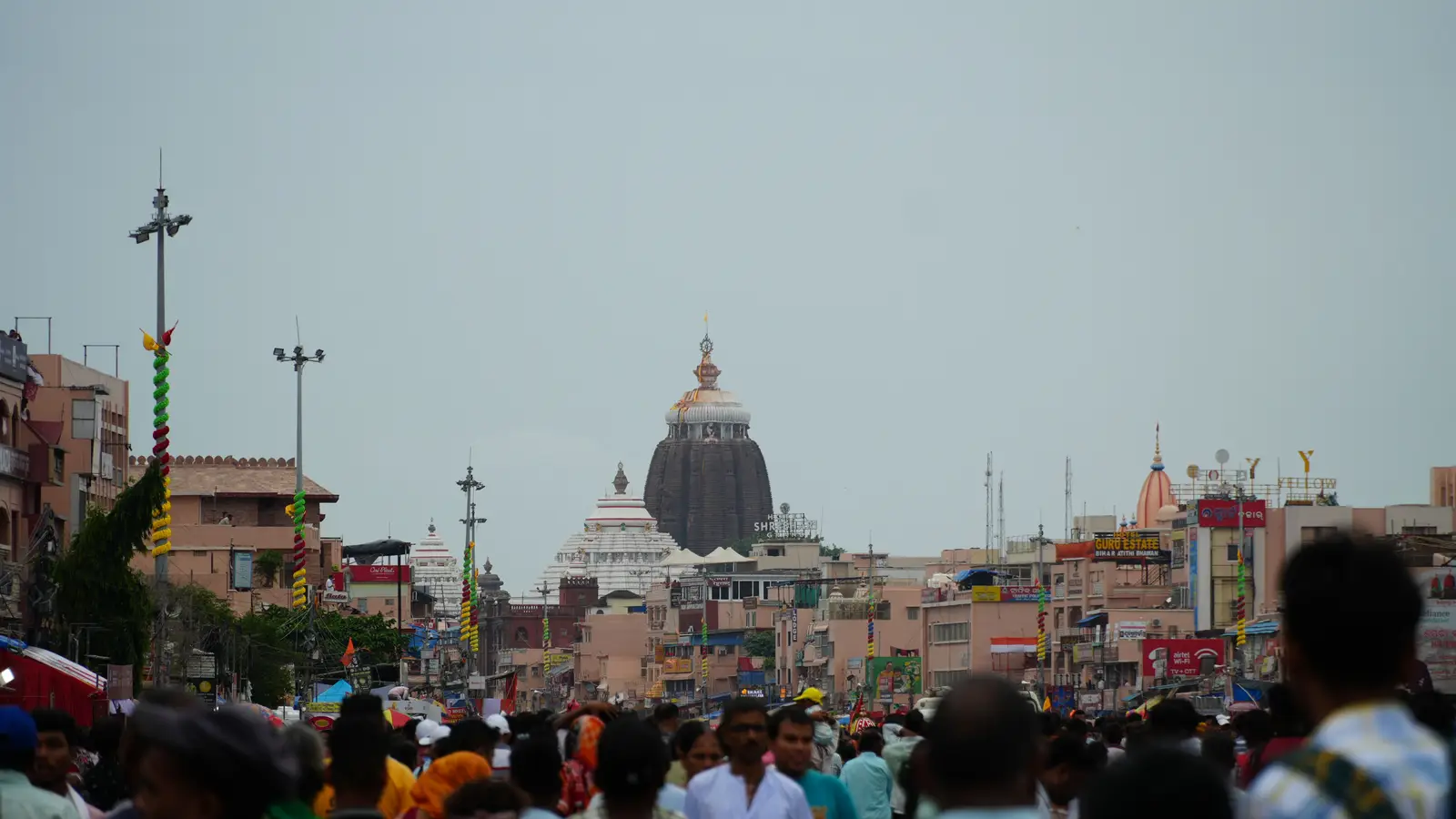
Hundreds of thousands grasp the ropes and haul the chariots ~3 km down the Bada Danda (Grand Road) to the Gundicha Temple.
Stay at Gundicha
The deities rest at the Gundicha Temple — the “Garden House”, revered as the Lord’s aunt’s home — for about seven to nine days.
Bahuda Yatra
The return journey. The chariots are pulled back to the main temple, pausing for the beloved Poda Pitha offering on the way.
Niladri Bije
The finale — the deities re-enter the sanctum, marking the end of the festival with tender, much-loved rituals at the doorway.
Key Rituals
The moments that define the Yatra.
Chhera Pahara
The Puri King sweeps the chariots with a golden broom — the festival’s great emblem of equality before God.
Suna Besha
The deities are adorned in dazzling golden ornaments and attire on the chariots — a rare, resplendent sight.
Hera Panchami
Goddess Lakshmi visits Gundicha in search of the Lord — a spirited, emotive ritual of devotion.
Bahuda Yatra
The return chariot journey back to the Jagannath Temple after the stay at Gundicha.
Niladri Bije
The deities’ homecoming into the sanctum — the affectionate closing rite of the Yatra.
Planning Your Visit
How to experience the Rath Yatra well.
Book Months Ahead
Puri’s hotels fill up long before the festival. Reserve your stay and transfers as early as possible — we lock rooms months in advance.
Expect Huge Crowds
Millions descend on Puri. Move early, stay hydrated, keep valuables minimal, and agree a meeting point with your group.
Best Vantage: Grand Road
The Bada Danda (Grand Road) between the two temples offers the finest views. Rooftop and balcony spots are prized — we help arrange them.
Rare Open Darshan
This is the one time everyone, regardless of faith, can have darshan of the deities — on the chariots. Plan your timing for it.
Plan your Rath Yatra trip
Tell us your plan — we’ll confirm this year’s dates and send a Rath Yatra itinerary and tariff within 2 hours.
FAQ
Puri Rath Yatra — your questions.
Keep exploring