
Konark Sun Temple
The chariot of the Sun, carved in stone.
A 13th-century masterpiece near Puri — a colossal stone chariot of Surya on 24 sundial wheels, drawn by seven horses, and a UNESCO World Heritage Site since 1984.
Get a Free Quote
Tell us your dates — we reply within 2 hours on WhatsApp.
The Story
A temple built as the Sun God’s chariot.
Around 1250 CE, King Narasimhadeva I of the Eastern Ganga dynasty raised at Konark one of the boldest ideas in Indian architecture — an entire temple conceived as the celestial chariot of Surya, the Sun God, sweeping across the heavens.
Set on the Odisha coast where the Sun was believed to rise from the sea, the temple faces due east so the first light of dawn falls upon its entrance. Generations of sculptors covered every surface — wheels, horses, gods, dancers and daily life — in some of the most exquisite stone carving anywhere. UNESCO inscribed it as a World Heritage Site in 1984.
Temple at a Glance
Opening hours are approximate (≈ 6 AM–8 PM) — please confirm the current timings and ticket locally on arrival.
The Architecture
Wheels, horses & a chariot in motion.
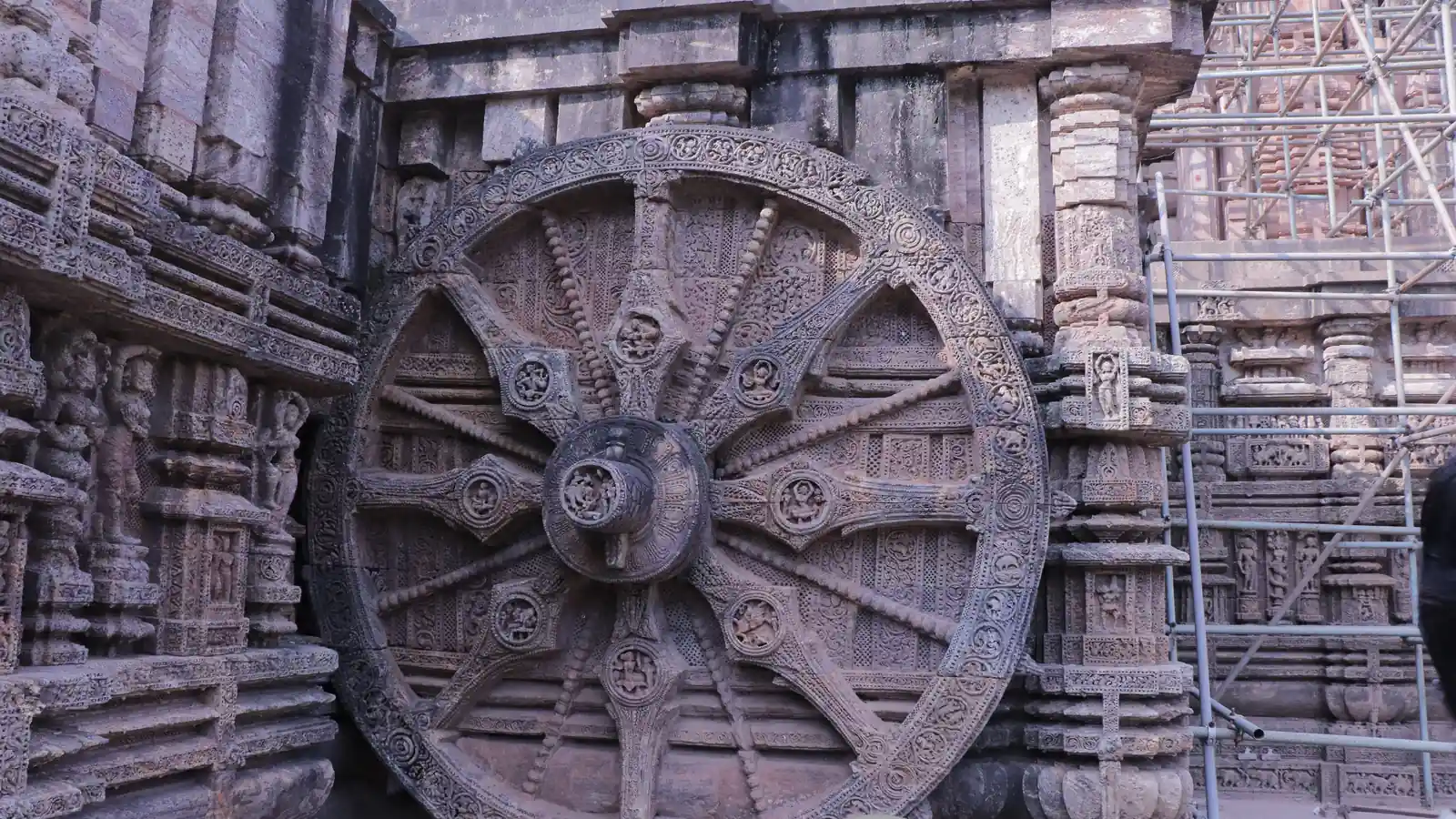
24 Carved Wheels
Twelve pairs of intricately sculpted stone wheels, each about three metres across, line the temple base — the chariot’s spinning motion frozen in stone.
Seven Stone Horses
Seven straining horses draw the chariot of the Sun across the sky, thought to represent the seven days of the week (or the sun’s seven rays).
Facing the Sunrise
The temple is oriented due east, so the first rays of dawn strike the entrance and once lit the presiding deity within.
The “Black Pagoda”
European sailors named it the Black Pagoda — a dark landmark rising over the coast that guided ships along the Bay of Bengal.
The Wheels That Tell Time
Each wheel is a working sundial.
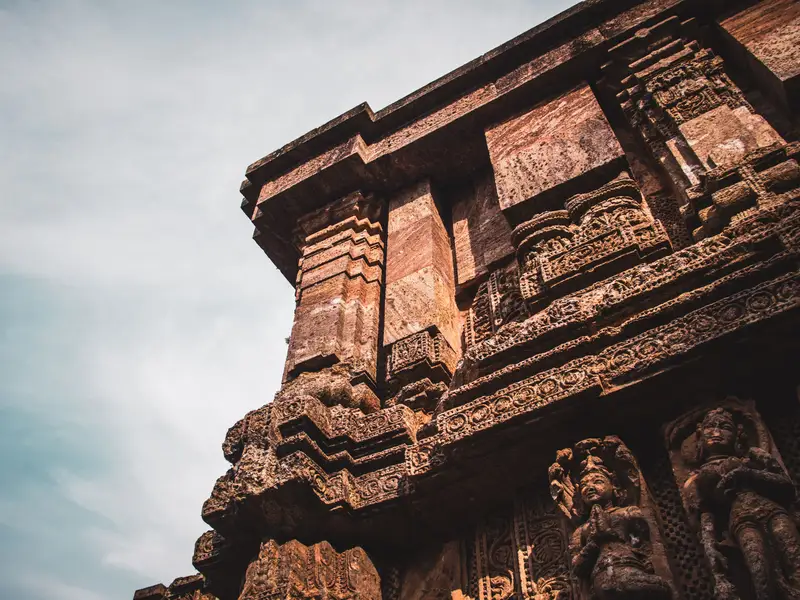
The most astonishing feature at Konark is that its great carved wheels are not merely decorative — they are precise sundials. The eight major spokes divide the day, and by reading the shadow cast by the central axle and the finely carved beads along the rim, one can tell the time of day remarkably accurately.
Seven centuries on, local guides still demonstrate it at the temple — a reminder that Konark married devotion with astronomy and engineering at the height of Kalinga craftsmanship.
Visiting Konark
Best time, how to reach & nearby.
Konark lies about 35 km from Puri — an easy hour along the scenic Marine Drive — and roughly 65 km from Bhubaneswar. The temple complex opens around 6 AM and closes near 8 PM (confirm locally). Come early morning or late afternoon for softer light and thinner crowds, and October to March for the most pleasant weather.
It slots perfectly into a Puri itinerary, most often paired with Chandrabhaga Beach and the Pattachitra painters’ village of Raghurajpur.
≈ 3 km
Chandrabhaga Beach
A wide, calm beach near the temple, sacred to the sun and a lovely sunrise spot.
En route
Ramachandi Temple
A serene shrine to the goddess Ramachandi where the Kushabhadra river meets the sea.
December
Konark Dance Festival
Classical dancers perform against the floodlit temple every December — a stunning annual spectacle.
Pairs perfectly with a Puri trip
Do a morning darshan at the Jagannath Temple, drive out to Konark and Chandrabhaga after, and end at Raghurajpur — a classic day we build into every Puri–Konark package.
Visit Konark with us
Share your dates — we reply within 2 hours on WhatsApp with a Puri & Konark itinerary and tariff.
FAQ
Konark Sun Temple — your questions.
Keep exploring